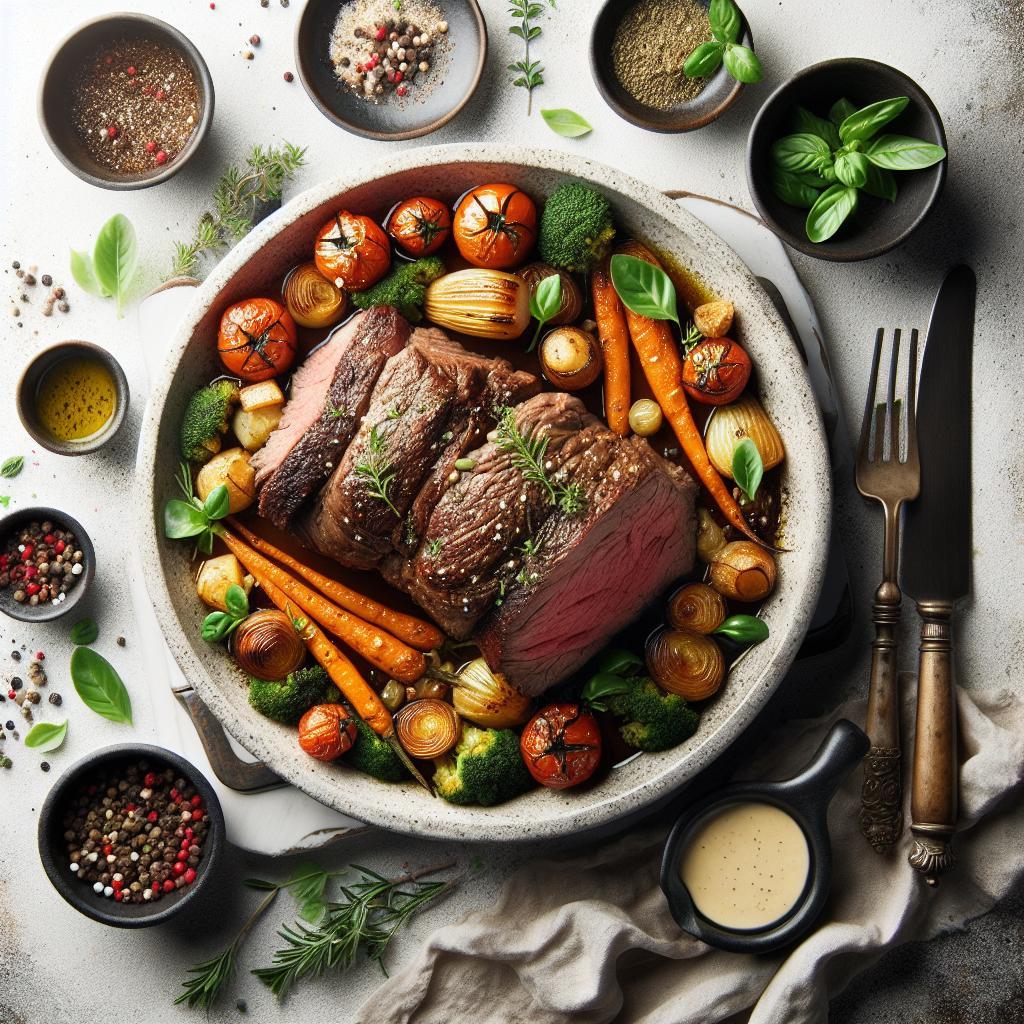

There’s something deeply satisfying about slicing into a perfectly cooked beef roast-its tender, juicy interior promising a feast that both comforts and impresses. Yet, despite its reputation as a classic centerpiece, mastering the art of the perfect beef roast can feel elusive, often ending in chewy bites or dry edges. Fear not: with the right techniques, thoughtful preparation, and a few insider tips, you can transform this timeless dish from a gamble into a guaranteed triumph. In this article, we’ll unravel the secrets to juicy success, guiding you step-by-step toward a roast that’s bursting with flavor, melt-in-your-mouth tenderness, and the kind of savory perfection that turns every meal into a celebration.
Mastering the Perfect Beef Roast: Tips for Juicy Success
Mastering the perfect beef roast: tips for juicy success begins with understanding the art and science behind selecting a cut that delivers supreme flavor and tenderness. As a dish steeped in tradition, the beef roast has long been a centerpiece of celebratory meals and cozy family dinners alike. Its timeless appeal lies in its ability to satisfy the soul with succulent, melt-in-your-mouth texture paired with rich, savory notes.
My own journey to mastering this classic started years ago, experimenting with various cuts and seasoning blends, learning how each variable impacts the final result. Today, I’m excited to share the insider knowledge that transforms your beef roast from ordinary to extraordinary.
Prep and Cook Time
- Preparation: 20 minutes
- Marinating: 4-6 hours (optional but recommended)
- Cooking: 1 hour 30 minutes to 2 hours (depending on roast size and desired doneness)
- Total Time: Approximately 2 to 3 hours
Yield
Serves 6 to 8 generous portions
Difficulty Level
Medium – perfect for home cooks seeking to elevate their roasting skills
Ingredients
- 3 to 4 pounds beef roast (prime rib, top sirloin, or chuck eye)
- 2 tablespoons extra virgin olive oil
- 4 cloves garlic, minced
- 1 tablespoon fresh rosemary, finely chopped
- 1 tablespoon fresh thyme leaves
- 1 teaspoon smoked paprika
- 1 teaspoon kosher salt
- ¾ teaspoon freshly ground black pepper
- ½ cup beef broth (low sodium)
- 1 tablespoon Dijon mustard
Instructions
- Select your beef roast: Choose a cut with good marbling, such as prime rib or top sirloin, to ensure optimal flavor and tenderness when roasting.
- Prepare the marinade: In a small bowl, whisk together olive oil, minced garlic, rosemary, thyme, smoked paprika, salt, and pepper until well combined.
- Coat the beef: Rub the marinade generously all over the surface of the beef roast. Place it in a resealable bag or covered dish and refrigerate for 4-6 hours or overnight for deep flavor infusion.
- Bring to room temperature: Remove the roast from the refrigerator about 30 minutes before cooking. This step ensures even cooking and juiciness throughout.
- Preheat your oven to 375°F (190°C). Position a rack inside a roasting pan.
- Sear the roast: Heat a large skillet over medium-high heat and sear the beef on all sides until a rich brown crust forms, approximately 3-4 minutes per side. This locks in the juices and develops complex flavor.
- Roast: Transfer the seared roast onto the rack in the roasting pan. Roast uncovered until the internal temperature registers 135°F (57°C) for medium-rare, about 1 hour 30 minutes. Use a meat thermometer for precision.
- Prepare the pan sauce: While the beef rests, pour beef broth and Dijon mustard into the roasting pan. Place over medium heat and whisk to combine the flavorful browned bits, reducing slightly to thicken.
- Rest the beef: Remove the roast from the oven, tent loosely with foil, and let it rest for 15-20 minutes before carving. This crucial step allows the juices to redistribute, preserving moistness.
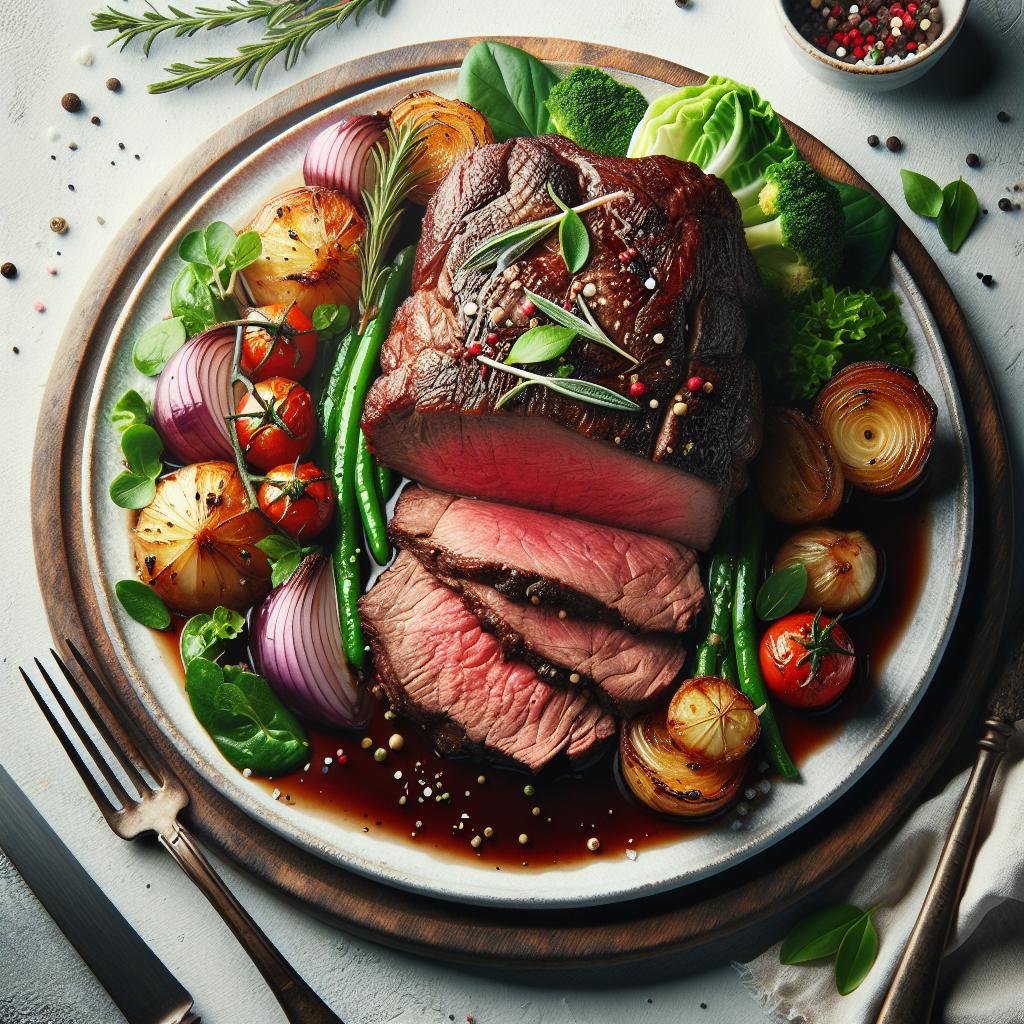
- Carve with care: Slice thinly against the grain to maximize tenderness and present your perfectly cooked beef with the vibrant pan sauce drizzled on top.
Chef’s Notes
- For a more herbaceous twist, swap rosemary and thyme for fresh oregano and sage.
- If you prefer a spicier profile, add a pinch of cayenne or smoked chili powder to the marinade.
- Always use a reliable meat thermometer to avoid overcooking and dry texture – aiming for 130-135°F for medium-rare is ideal.
- Make ahead tip: The marinade can be prepared a day before, saving precious time on the day of cooking.
- Leftovers keep beautifully for 3 days refrigerated and reheat best uncovered in a moderate oven to maintain juiciness.
Serving Suggestions
Present your roast slices atop a bed of creamy mashed potatoes or roasted root vegetables. Garnish with freshly chopped parsley and a few sprigs of thyme for an elegant touch. Accompany with a side of horseradish cream or a rich mushroom gravy for added indulgence.
Pairing with a crisp arugula salad brightens the palate and complements the beef’s robust flavor.

| Nutrient | Per Serving |
|---|---|
| Calories | 350 kcal |
| Protein | 45 g |
| Carbohydrates | 2 g |
| Fat | 16 g |
For further inspiration, discover related expert tips on the perfect roast beef side dishes and elevate your meal planning.
To deepen your culinary knowledge, visit Serious Eats’ in-depth guide on beef roasting techniques, renowned for detailed advice backed by chef-tested science.
Q&A
Q&A: Mastering the Perfect Beef Roast: Tips for Juicy Success
Q1: What is the key to achieving a juicy beef roast?
A1: The secret lies in balancing the right cut, seasoning, and cooking method. Start with a well-marbled cut like ribeye, chuck, or sirloin, as the intramuscular fat helps keep the meat tender and moist. Season generously with salt and your favorite herbs to enhance flavor. Finally, use a low-and-slow roasting technique or reverse sear method to allow the juices to redistribute evenly, ensuring every bite is succulent.
Q2: How can I choose the perfect beef cut for roasting?
A2: Look for cuts designed for roasting that have good marbling and a solid muscle structure. Prime rib, bottom round, and eye of round are popular choices. Rib roasts are prized for tenderness and flavor, while chuck roasts excel at becoming melt-in-your-mouth soft when cooked slowly.
Q3: Why is resting the roast important before carving?
A3: Resting allows the muscle fibers to relax and the juices to reabsorb into the meat. Carving immediately from the oven squeezes out those precious juices, leading to dry slices. Rest your roast tented loosely with foil for at least 15-20 minutes to lock in moisture and flavor.
Q4: Can I use seasonings other than salt and pepper for the beef roast?
A4: Absolutely! Beef pairs beautifully with a variety of herbs and spices. Try garlic, rosemary, thyme, smoked paprika, or even a touch of mustard powder. Experimenting with dry rubs or marinades can elevate the flavor profile and make your roast truly your own signature dish.
Q5: What’s a foolproof way to check if my beef roast is cooked perfectly?
A5: Invest in a reliable meat thermometer! Aim for an internal temperature of about 125°F (52°C) for rare, 135°F (57°C) for medium-rare, and 145°F (63°C) for medium. Remove your roast from the oven a few degrees shy of your target-carryover heat will finish the job during resting.
Q6: How can I prevent my beef roast from drying out during cooking?
A6: Beyond choosing the right cut and seasoning well, maintaining moisture is key. Use a roasting pan with a rack to allow air circulation, and baste periodically with pan drippings or beef broth. Covering the roast loosely with foil during the cooking process can also help retain steam and tenderness.
Q7: Is searing necessary before roasting, and why?
A7: While not mandatory, searing is a fantastic step to develop a deep, caramelized crust that locks in juices and adds complex flavor. Sear your roast on all sides in a hot pan before transferring it to the oven; this Maillard reaction is what makes your beef roast mouthwateringly delicious.
Q8: Can I prepare a beef roast ahead of time?
A8: Yes! Marinate your roast a day in advance to infuse flavor, or season it and let it rest overnight in the refrigerator. Just remember to bring the meat to room temperature before roasting to ensure even cooking. This prep work can elevate your roast from good to unforgettable.
Q9: What side dishes complement a perfect beef roast?
A9: Classic companions include roasted root vegetables, creamy mashed potatoes, and bright green beans. For a touch of freshness, consider a crisp arugula salad with lemon vinaigrette. The richness of the beef pairs harmoniously with both earthy and vibrant sides, creating a balanced meal.
Q10: How should I store leftover beef roast to keep it juicy?
A10: Let leftovers cool completely before wrapping tightly in foil or placing in an airtight container. Store in the refrigerator for up to 3-4 days. To reheat, use gentle methods like oven warming with a splash of beef broth or low-heat microwaving covered with a damp paper towel to preserve moisture.
To Conclude
Mastering the perfect beef roast is more than just following a recipe-it’s about embracing the art of patience, precision, and passion. With the right techniques tucked under your apron, each roast transforms into a centerpiece of tender, juicy perfection that will wow your family and friends. So next time you fire up the oven, remember these tips and let your confidence rise alongside that glorious crust. Your journey to juicy success is just a roast away-now go carve your way to culinary mastery!